
Montessori lessons promote child-led learning with the Montessori guide being flexible and encouraging freedom for the child to explore on their own. Montessori lessons are brief and very few words are used. As Maria Montessori states, “Education is a natural process carried out by the child, and is not acquired by listening to words, but by experiences in the environment” (The Absorbent mind. 1995). The lessons are simple and narrow and concepts down with no unnecessary information. The lessons are child-led and no corrections or praise is made during a lesson. In this lesson I will explore how Montessori lesson are presented, the three period lesson, and how to determine which lessons to present to which child.
Lessons And Their Presentation
In her book, The Montessori Method, she writes, “The collective lessons, in fact, are of very secondary importance and have been almost abolished by us” (Montessori, 1965). In this quote, she is stating that lessons during the work cycle should be taught one to one and not as a whole group. One to one is especially important when students are new in the classroom. After that, some of the lessons can be taught in small groups. The only time lessons are taught as a whole group is for line time lessons. Another reason that one to one lessons are best is because children get distracted easily and this will allow for them to focus on the lesson and the materials being presented. The guide demonstrates how to use the materials during a Montessori lesson with near silence and intentional and slow movements. It is the modeling of the materials that keeps the focus and attention of the students and not words.
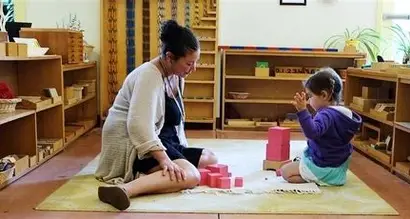
The lessons should be presented where the student will be working on the lesson, either on a rug or a child-size table. That means the guide will be on the floor a lot with a rug presenting lessons or sitting on a small child chair at a table. When demonstrating, the guide will use both hands and present very slowly. The guide should sit side by side with the student. If the child is right-handed then the guide will sit to the child’s left and vice versa so they can see your hands and fingers better. The activities are modeled from left to right because that prepares the student for reading and writing. The guide Exaggerates the importance of my movements with the materials because it tells the child this is important work and they should be careful and precise with it. In a child-like way the guide can demonstrate how much you love the materials and how special they are so they learn to take care of them.
After demonstrating the lesson completely it is time to invite the child to do the lesson. It is always okay to give them the freedom to decide they don’t want to do it now. In that case you can put the lesson back on the shelf together and they can do it by themselves when they choose to. If they want to do the lesson, silently observe them without making any corrections, interruptions, or praises. The student will know if they need to make any corrections because they have the control of error.
Three Period Lesson
The Three Period Lesson is an organized way to present a lesson in the order that a child learns. First, you present the information, next they recognize it when you ask them to show you, and finally they can recall it when you ask “what’s this?” The three period lesson moves the student from beginning to mastery of a concept that they are learning.
For the first period it is the first time that a child has been exposed to a lesson. The guide will tell the student what the lesson is. For example, point to the continent of Africa on a globe and say, “this is Africa” and the let the child explore Africa on the globe. With a language lesson the guide names all the letter sounds and the names of objects and again lets the student explore.
Period two is when the child shows recognition by pointing when asked to show something. This is the longest part of the three period lesson. This is when they practice the lesson on their own. The guide will ask the child to show them what something is and they will point to it. The Montessori lessons are set up to be hands-on activities and I spy games so that they are being engaged while practicing.
The third period shows recall when the student is asked to name something. The guide asks, “what’s this” and the student will name it. This is how the guide will determine mastery of a concept.
How Does The Guide Determine When And What Lessons To Present To Which Child?
The best way to determine what lesson to present to a child is by observation. The guide takes notes during observations and will be able to determine what lessons they need, or will be interested in at the time. If a child makes a request for a lesson that another student has, I am flexible and I invite them to watch as I present the lesson to another student. This way I don’t take away any interest they have about a lesson. If a student asks for a random lesson based on their interests, you can connect their interest to a lesson that they are on in order to accommodate their curiosity and interest.
The guide should make sure that the child is practicing their lessons before moving on to new lessons. The amount of time between practice and moving on to a new lesson will vary from student to student based on what the guide observed. I sit down with the student and check for mastery before deciding whether to move to the next lesson or not. I found that it is important to be flexible and let the student guide you in their learning and use observations of the student to inform your lesson planning for a student.
Conclusion
Montessori enables a child to learn at their own pace and the lessons are engaging and hands-on activities. Montessori lesson are presented almost silently using very slow and precise movements for demonstrations. The Three Period Lesson is an organized way to present a lesson in the order that a child learns. The Montessori guide prepares a child for success and the child succeeds on their own. The most important thing to remember is to let the child be the focus of the lesson and to follow the child with their interests and the pace of their learning.