
Children are naturals at community service! Even a newborn baby can put a smile on a lonely or sad person’s face without any effort.
The Montessori philosophy promotes a child’s respect for self, people, school environment, community, and the world. The students practice this philosophy through grace and courtesy, practical life skills, and community service. Maria Montessori believed that through the Montessori method of education, we can create a better world. Maria believed that “the child is both the hope and a promise for mankind.”
Service to community is ingrained in the Montessori curriculum. Each and every day, in Montessori classrooms across the world, children are inspired to respect others, build positive relationships, and to help others. They learn from real and practical life experiences the joy of giving and helping others. They respect and share their lessons with others. Their guides are smiling warmly at them as they freely engage in their joyful learning. Children honor each other for each year of their lives as they walk around the sun in a celebration of life. They learn to take care of their environment, take care of self, and take care of others. They make peace with each other at the peace table. This is how Montessori students develop an intrinsic desire to help others.
There are many opportunities for community service from the primary years to the elementary years. Students can plant a community garden, they can volunteer in a soup kitchen, they can paint beautiful murals over graffiti, they can send cards to people who might be lonely, and many other ways to work together in service to make our world a better place. In this article I want to share a community service project that I did with my primary class. It was community project for dogs that are in shelters that we did to honor of Martin Luther King, Jr. Day.
As a whole group, we would meet during line time each day to learn and share before starting our project. We began by building background with a study of animals that can be pets. We learned about their features, how to take care of a pet, and what they need to live and be happy. Students brought in pictures of their pets and we placed them on a class bulletin board. Students wrote and drew pictures of their pets, or pets they wished to have, in their journals. We discussed animals that were not taken care of and what happens to them. I showed pictures of animals in shelters and this opened discussion from the students about how they can help the animals. We talked about adoption, and volunteering at the shelters, bringing food and blankets to the shelter, making sure you can take care of a pet before you get it, and why it is best to adopt from a shelter rather than buy a pet from the pet shop.
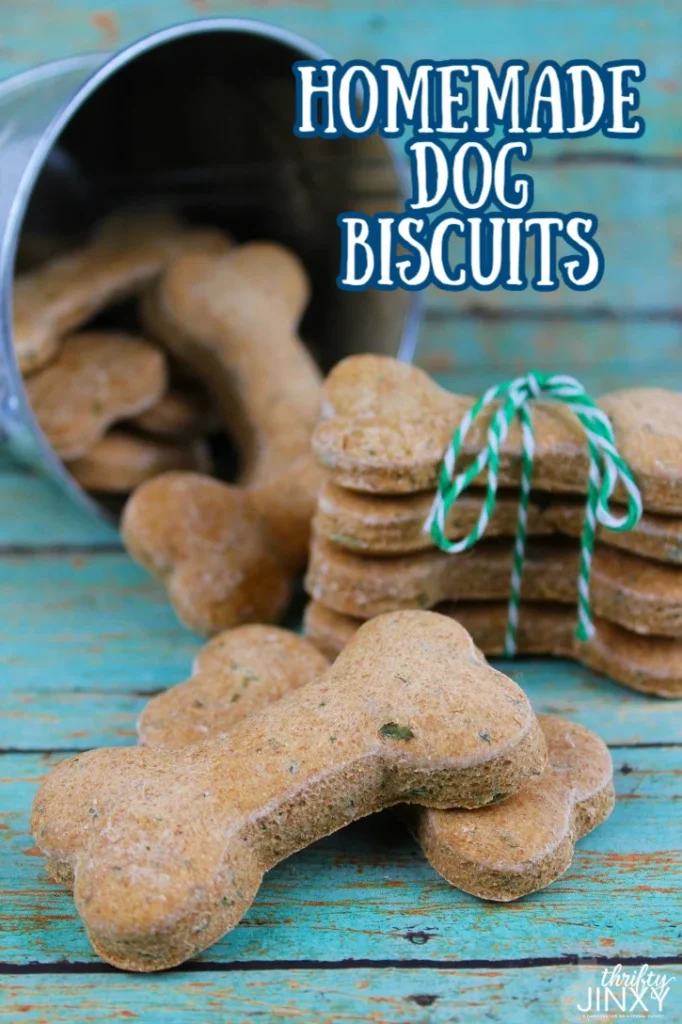
Next, we brainstormed what our mission will be. We asked the question; What can we do in class that would help the animals at the shelter? That is when the idea of making dog biscuits came up. This is a perfect practical life exercise that we could do in class during the work cycle and we would be doing our small part to help the dogs a the shelter.
Finally, we discussed the tasks involved to accomplish our mission. We worked together to break it down into parts and how it would work in our work cycle.
In order to set up this practical life activity you will need:
Rolling pin
2-4 bone cookie cutters
Dog biscuit recipe
Large tray for biscuits
3 trays for lessons
Measuring cup
Large bowl and wooden spoon
Lunch bags
Yarn or ribbon
Scissors
Crayons
Sponge and towels for cleaning up
With a small group of students watching, I started by laying out all the ingredients needed to make the dog biscuit dough. I carefully named each item and placed them on the table. I supported students as we read the recipe and measured the ingredients and put them in a bowl. Next, it is time to mix. Students can then take turns stirring the ingredients together in the bowl. Once the dough is ready, students can take turns kneading the dough. I modeled how to roll a handful of dough with rolling pin and how to cut the dough with the cookie cutter to make a biscuit. When a biscuit is done they put it on a tray. At the end of the day I would bake the biscuits. Now it is time for the students to work independently on the lessons they choose. I made four lessons to put out in practical life. I put the dough in the middle of a table to share for rolling and cutting lessons.
Rolling Lesson: On a tray put rolling pin, a sponge, towel, cutting board or plastic plaee mat..
Cutting lesson: On a tray put two bone cookie cutters, cutting board, sponge, and towel.
Bag art lesson: On a tray put lunch bags, crayons and colored pencils
Bag filling and bow tying lesson: On a table put tray of baked biscuits, decorated bags, scissors and yarn. Students put four biscuits in each decorated bag and close bag by making a bow at the top with yarn.
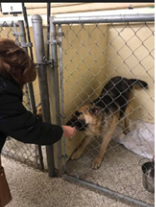
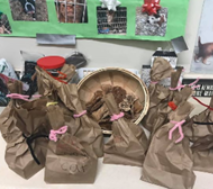
I made arrangements with a local shelter who were so happy to come out and pick up our biscuits when the project was complete. We made about 200 biscuits in two weeks. The person from the shelter brought a small dog with him who sampled the biscuits. The dog gobbled it up, much to the delight of the students! He also sent us pictures of dogs at the shelter eating the biscuits.
We worked on this community service project for about four weeks. At the end of project, I made time for my students to reflect upon the project and how they might build on this experience. How did it make them feel to help? What else could do they do for other animals or people to help in their community?
This community project teaches many practical life skills such as rolling, cutting, making bows, kneading dough, stirring, measuring, pouring and coloring. These activities improve fine motor skills, develop imagination, and build strength and dexterity in fingers which will prepare them for handwriting. This community project develops the whole child and teaches them about working together, responsibility, contribution, and helping others. It creates a positive impact on a child’s social development, compassion, and character. As Maria Montessori stated, “We must clearly understand that when we give the child freedom and independence, we are giving freedom to a worker already braced for action, who cannot live without working and being active.”
Recipe for Dog Biscuits:
Ingredients
• 2 ½ cups oats
• 1 tsp. salt (or less)
• 1 egg
• 1 tsp. beef or chicken bouillon paste or 1 can beef or chicken broth/stock
• ½ cup hot water
Directions
1. Preheat oven to 350 degrees
2. Mix all ingredients together
4. Knead dough until it forms a ball
5. Roll dough until ½ inch thick
6. Cut into bone shapes with cookie cutter
7. Place dough bones on lightly greased cookie sheet
8. Cook for 30 minutes4.
9. Let cool completely